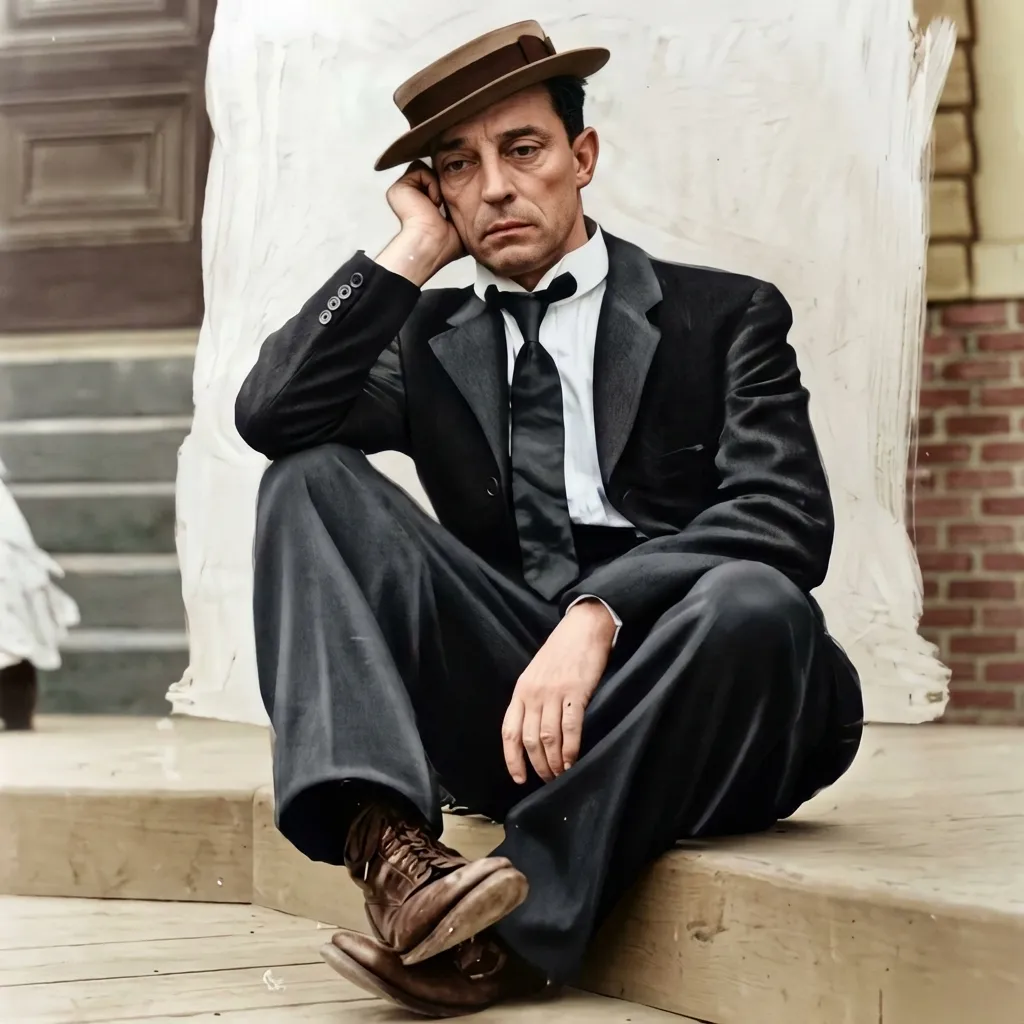
The man who never smiled while the whole world laughed. His dangerous stunts and deadpan humor defined silent cinema.
Buster Keaton was the master of physical comedy. While Charlie Chaplin played to the heart, Keaton played to the mind (and the laws of physics). Known for his stoic expression and incredible, death-defying stunts performed without trick photography, he remains a timeless icon of cinema. Here are 10 facts about the man who broke every bone in his body for a laugh.
1. His name came from Harry Houdini
Born Joseph Frank Keaton, he got his nickname "Buster" at the age of six months. Legend has it that he fell down a flight of stairs unharmed, and Harry Houdini, who was touring with Keaton's parents, exclaimed, "That was a real buster!" The name stuck for life.
2. He was a human projectile as a child
Keaton began performing in vaudeville at age three with his parents as "The Three Keatons." The act involved his father throwing him around the stage, sometimes into the orchestra pit or even at hecklers. Keaton learned early how to fall safely, claiming he didn't feel pain because he went limp on impact.
3. He broke his neck... and didn't know it
In the movie Sherlock Jr. (1924), there is a scene where water from a railroad tank washes him onto the tracks. The water hit him with such force that his neck slammed against the steel rail. He suffered blinding headaches but continued filming. Years later, an X-ray revealed he had actually fractured a vertebra in his neck and it had healed on its own.
4. The house falling scene was real
In Steamboat Bill, Jr. (1928), the most famous stunt in silent film history occurs: a two-ton house facade falls over Keaton, and he is saved only by standing exactly where the open window lands. This was not a trick. If he had missed his mark by inches, he would have been crushed. The crew was so terrified that the cameraman looked away as he filmed it.
5. "The Great Stone Face"
Keaton made it a rule never to smile on camera. He realized early in vaudeville that the audience laughed harder if he looked confused or indifferent to the chaos around him. This deadpan expression became his trademark, earning him the nickname "The Great Stone Face."
6. He did all his own stunts
Unlike many stars who used doubles for dangerous scenes, Keaton performed every single stunt himself. From jumping between buildings to grabbing moving cars, his athleticism was unmatched. He often doubled for other actors in his films when the stunts were too dangerous for them.
7. He was a mechanical genius
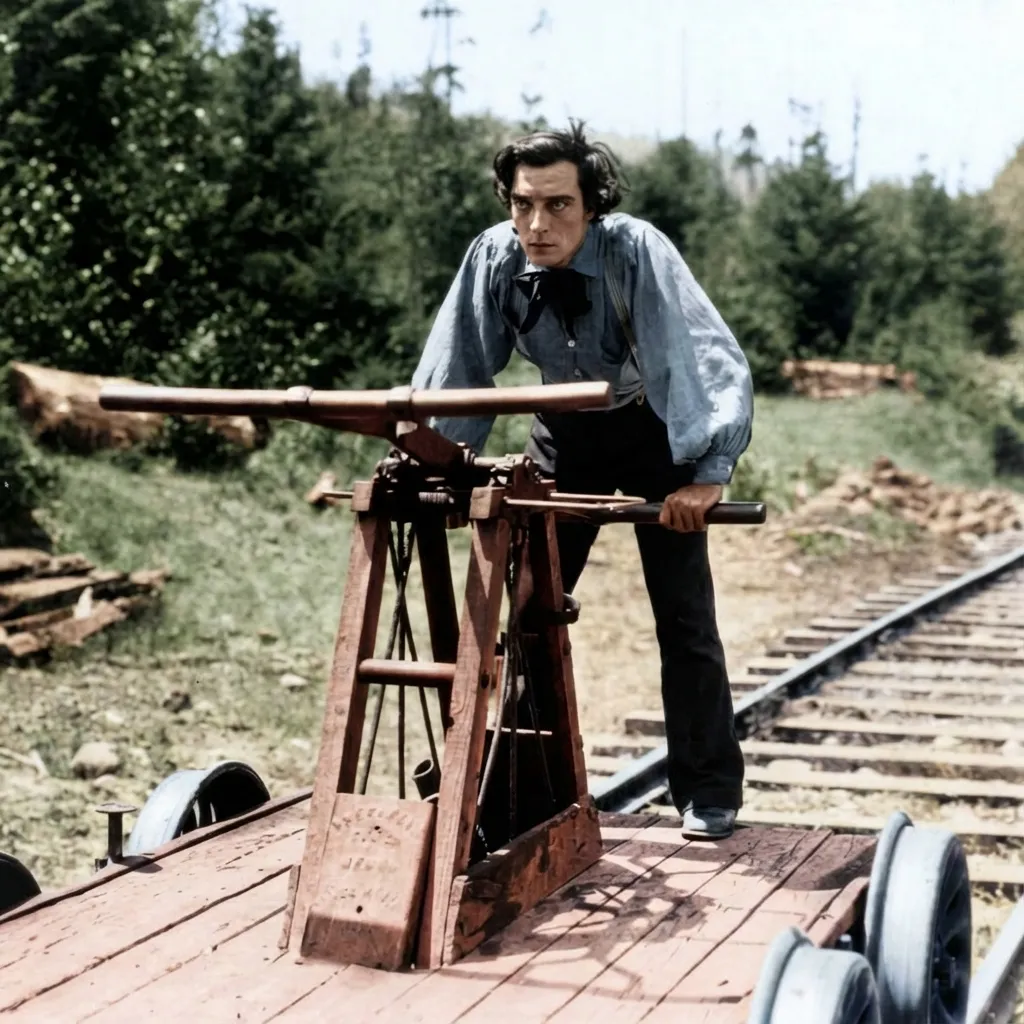
Keaton was fascinated by how things worked. He often designed his own props and special effects. The house falling stunt, the mechanical house in The Scarecrow, and the projection booth tricks in Sherlock Jr. were all products of his engineering mind.
8. His career tanked at MGM
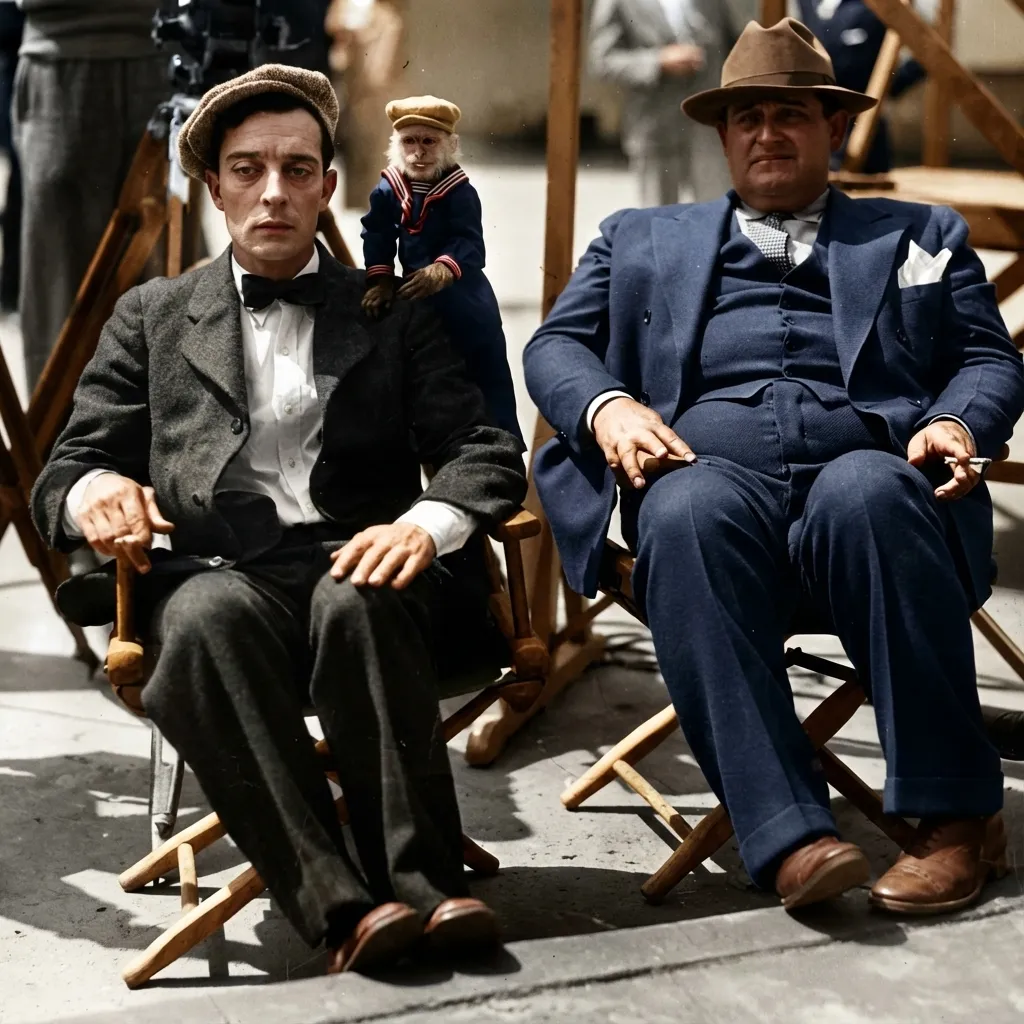
In 1928, Keaton made what he called the worst mistake of his life: he sold his independent studio to MGM. Under the strict studio system, he lost his creative freedom. Executives forced him to use stunt doubles and follow scripts, stripping away the improvisation that made his films genius. He descended into alcoholism and his career suffered for decades.
9. He had a massive comeback
In the 1950s and 60s, a new generation discovered his silent films. He received a standing ovation at the Venice Film Festival that reportedly moved him to tears (a rare break in his stone face). He appeared in films like Sunset Boulevard and It's a Mad, Mad, Mad, Mad World, finally receiving the respect he deserved before his death in 1966.
10. He is considered the greatest director of silent comedies
While Chaplin was the most popular, many critics argued that Keaton was the better filmmaker. His visual storytelling, framing, and editing were decades ahead of their time. Orson Welles famously stated that The General was "the greatest comedy ever made, the greatest Civil War film ever made, and perhaps the greatest film ever made."