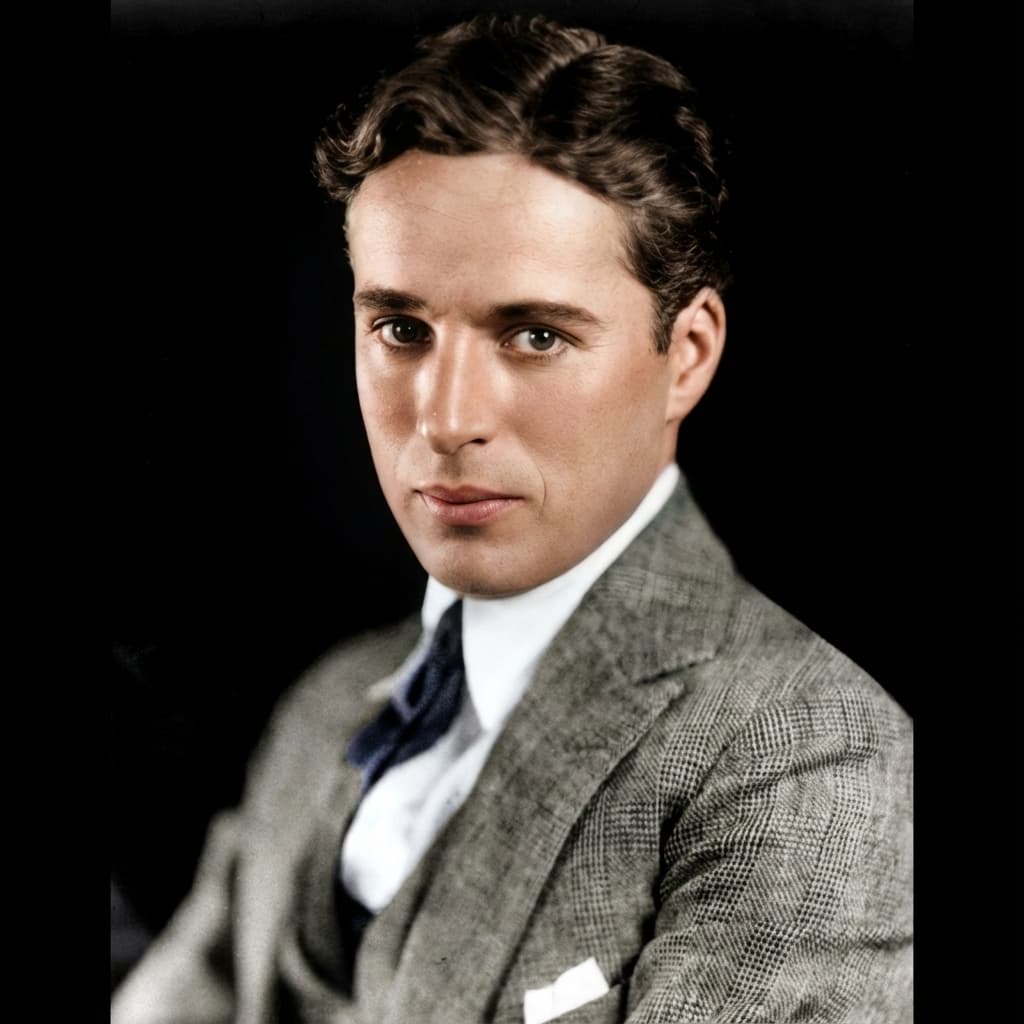
With his bowler hat, cane, and little mustache, he became the most famous face on Earth.
Sir Charles Spencer Chaplin turned poverty into poetry. Rising from the slums of London to become the richest and most famous man in the world, he used comedy to highlight the struggles of the common man. His character, "The Tramp," remains the universal symbol of the silent era.
1. A childhood of extreme poverty
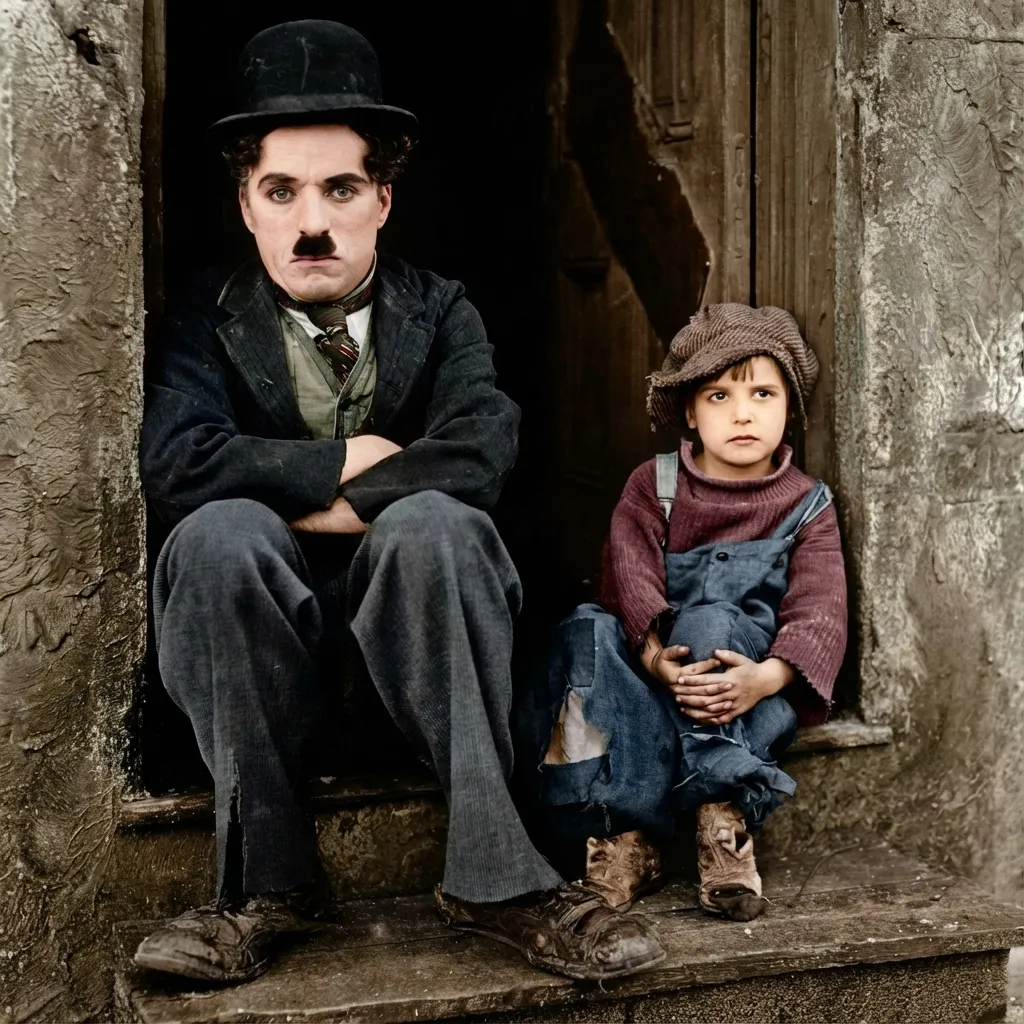
Chaplin’s Dickensian childhood was brutal. His father was an alcoholic who abandoned the family, and his mother struggled with mental illness and was committed to an asylum. Charlie and his brother Sydney spent years in workhouses and orphanages (schools for the destitute), scavenging for food on the streets of London.
2. The "Tramp" was an accident
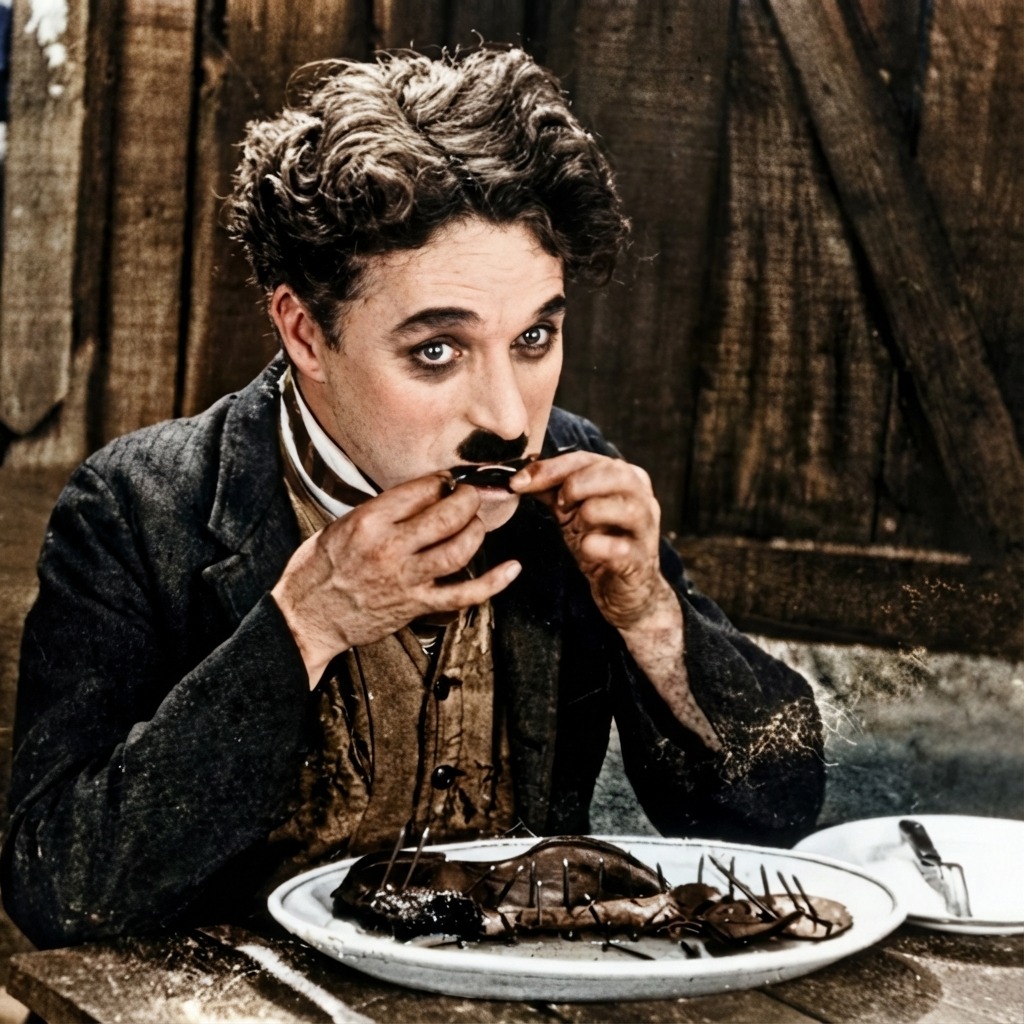
The iconic costume wasn't planned. In 1914, ordered to "put on something funny" for a film, Chaplin grabbed baggy pants (belonging to Fatty Arbuckle), a tight jacket, huge shoes, a small bowler hat, and a cane. He added a small mustache to look older without hiding his expression. The moment he put on the clothes, the character of the "Little Tramp" was born.
3. He wrote, directed, produced, and scored his films
Chaplin was a total control freak. He founded United Artists (along with Douglas Fairbanks, Mary Pickford, and D.W. Griffith) to escape studio control. He wrote the scripts, directed the action, starred in the lead role, produced the film, and even composed the musical scores for his movies (including the song "Smile").
4. He resisted "Talkies"
When sound movies arrived in 1927, Chaplin refused to switch. He believed the Tramp’s appeal was universal because he didn't speak. He released City Lights (1931) and Modern Times (1936) as silent films (with music/sound effects but no dialogue) long after everyone else had switched to sound. Both were massive hits.
5. First actor on Time Magazine cover
In 1925, Chaplin became the first actor ever to appear on the cover of Time magazine. By this point, he was a global phenomenon, recognized in villages in Africa and Asia where people had never seen a newspaper but had seen his moving pictures.
6. The Great Dictator
Chaplin finally broke his silence in 1940 with The Great Dictator. He dared to mock Adolf Hitler (who was the same age as Chaplin and had a similar mustache) at a time when the U.S. was still at peace with Germany. The film ends not with a joke, but with a passionate 5-minute speech directly to the camera, pleading for peace and humanity.
7. He was exiled from the U.S.
Despite living in America for 40 years, Chaplin never became a citizen. In the 1950s, during the "Red Scare," he was accused of being a communist sympathizer due to his social/political views. When he traveled to London for a premiere in 1952, the U.S. government revoked his re-entry permit. He settled in Switzerland and didn't return for 20 years.
8. He once lost a Charlie Chaplin look-alike contest
A popular urban legend—which Chaplin confirmed—is that he once entered a "Charlie Chaplin Look-Alike Contest" in a theater in San Francisco just for fun. He didn't win. In fact, he reportedly came in 20th place (or 3rd, depending on the version of the story).
9. His body was stolen
In a bizarre post-mortem twist, Chaplin’s coffin was dug up and stolen from his grave in Switzerland in 1978, just months after his death. The thieves demanded a ransom. The police eventually caught them, and Chaplin was reburied, this time under 6 feet of concrete to prevent future attempts.
10. The longest ovation in Oscar history
In 1972, the U.S. allowed him to return briefly to accept an Honorary Academy Award. When the frail 82-year-old walked onto the stage, the audience stood and applauded for a full 12 minutes—the longest standing ovation in Oscars history. It was a final reconciliation between Hollywood and its greatest creator.