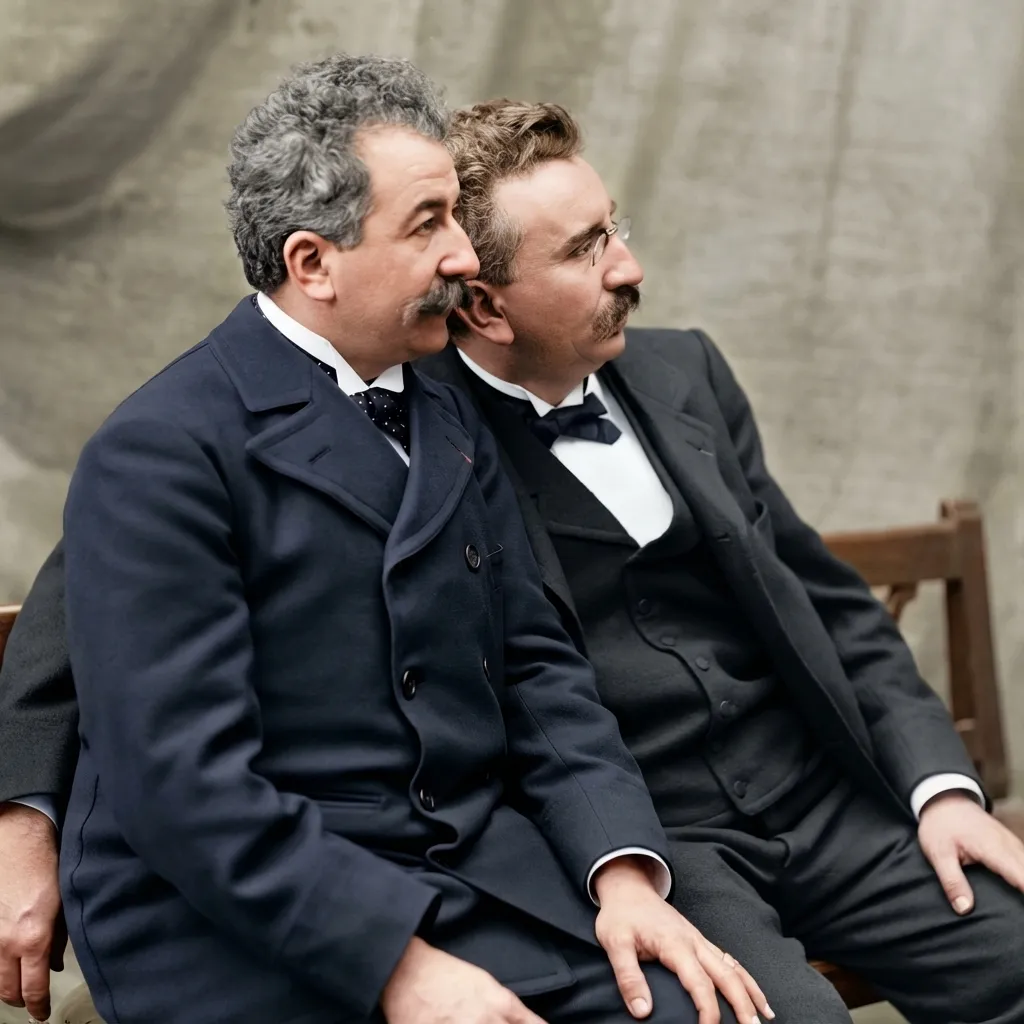
Auguste and Louis Lumière didn’t just make movies; they invented the experience of going to the cinema.
The Lumière Brothers, Auguste and Louis, are the fathers of modern filmmaking. While others like Edison were experimenting with moving images (peep shows), the French brothers envisioned cinema as a communal experience. In 1895, they projected images onto a big screen for an audience, changing entertainment forever.
1. Their name means "Light"
It is a poetic coincidence that the inventors of cinema, an art form based on capturing light, were named Lumière. In French, "lumière" literally means "light." Their father was a painter and photographer, so they were born into the trade.
2. They patented the Cinématographe
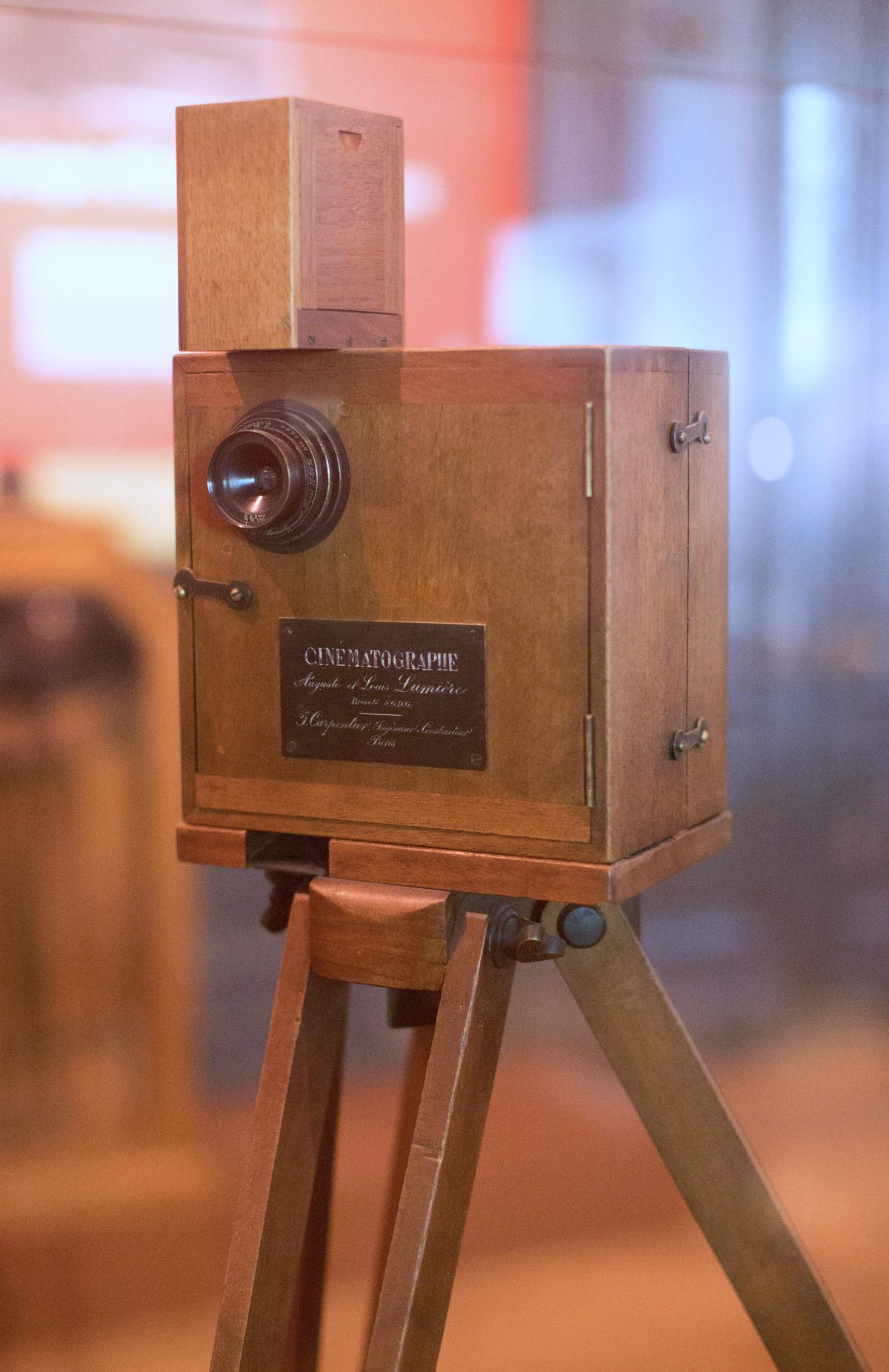
Edison’s Kinetoscope was a bulky box that only one person could look into at a time. The Lumières invented the Cinématographe, a portable device that could record, develop, and project motion pictures. It was hand-cranked, lightweight (5 kg), and allowed movies to be shown to a large audience simultaneously.
3. The first public screening
On December 28, 1895, in the basement of the Grand Café in Paris, they held the first commercial public screening of movies. The audience paid one franc to watch ten short films, each about 50 seconds long. This date is widely considered the birthday of cinema.
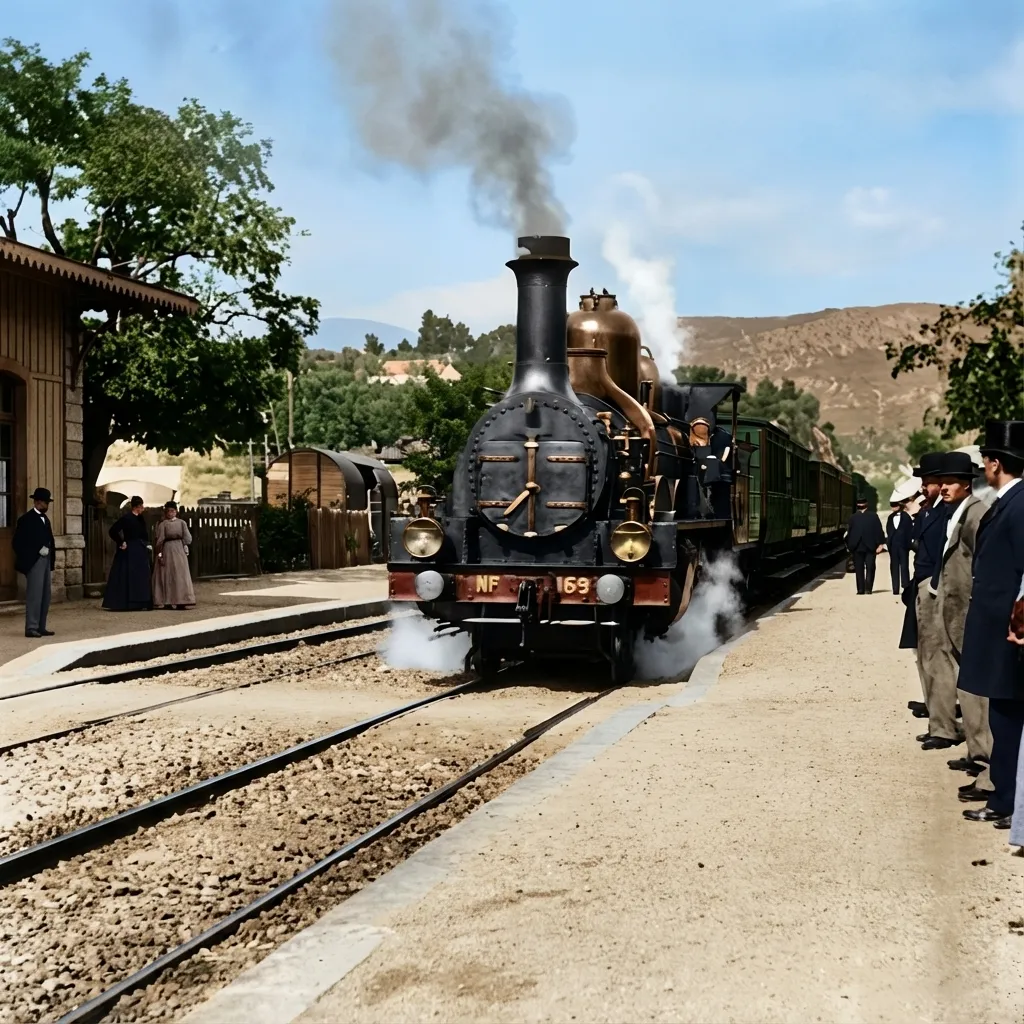
4. Did the audience run away?
A famous legend claims that when the brothers showed L'Arrivée d'un train en gare de La Ciotat (Arrival of a Train at La Ciotat), the audience was so terrified by the moving image of the locomotive coming towards them that they screamed and ran to the back of the room. While likely exaggerated, it highlights how shocking realistic motion was to early viewers.
5. They filmed everyday life
Unlike modern movies with scripts and actors, the Lumière films were "actualities"—documentaries of everyday life. They filmed workers leaving their factory (La Sortie de l'usine Lumière à Lyon), a baby eating breakfast, and people playing cards. They captured the world as it was.
6. The first comedy
They also created the first narrative comedy, L'Arroseur Arrosé (The Sprinkler Sprinkled). It depicts a gardener watering plants; a boy steps on the hose to stop the water, and when the gardener looks into the nozzle, the boy releases the foot, splashing the gardener. It’s the first known example of a fictional story on film.
7. They thought cinema had no future
Incredibly, the brothers did not believe in their own invention. Auguste famously said, "The cinema is an invention without a future." They saw it as a scientific novelty, not a form of mass entertainment. Within a few years, they abandoned filmmaking to focus on color photography, leaving the industry to others like Georges Méliès.
8. They invented color photography
After leaving cinema, they invented the Autochrome Lumière process in 1903. It was the primary color photography process used before the mid-20th century. It used microscopic potato starch grains dyed red-orange, green, and blue-violet to create color images on glass plates.
9. They saved thousands of lives
During World War I, the brothers contributed to the medical field. They developed a specifically treated tulle bandage (Tulle Gras) to treat burns and wounds, which prevented the dressing from sticking to the flesh. This invention was crucial in treating soldiers in trench warfare.
10. Their house is a museum
The family villa in Lyon, known as the Château Lumière, is now a museum dedicated to their work (Institut Lumière). It stands right next to the site of their old factory, the exact spot where the very first film, Workers Leaving the Lumière Factory, was shot over 120 years ago.