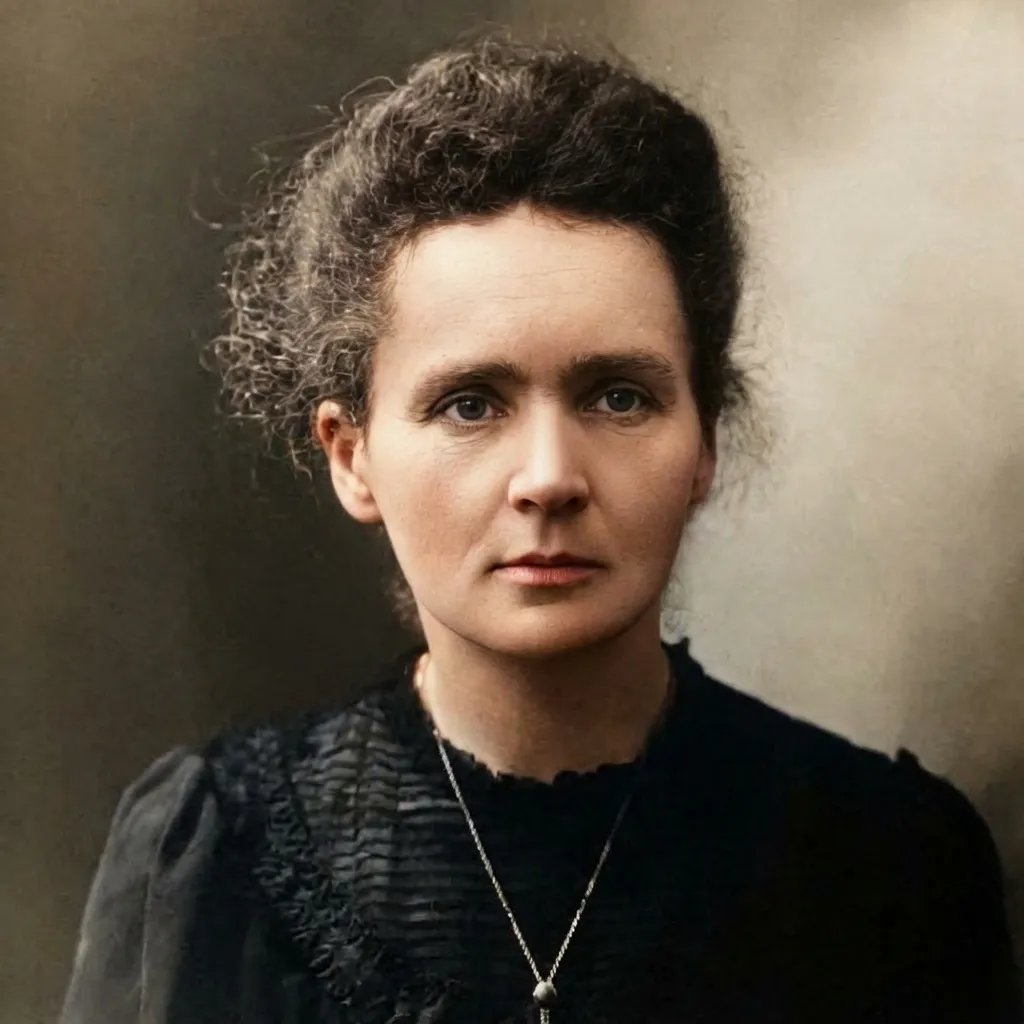
She died for science. The only person to win Nobel Prizes in two different scientific fields.
Marie Curie literally gave her life for her work. As a woman in science in the late 19th century, she faced immense barriers, yet she broke through them to become one of the most important scientists in history. Her discovery of radium changed medicine forever. Here are 10 facts about the Mother of Modern Physics.
1. Two Nobel Prizes in two fields
Marie Curie is in a league of her own. In 1903, she won the Nobel Prize in Physics (shared with her husband Pierre and Henri Becquerel) for their work on radiation. In 1911, she won a second Nobel Prize, this time in Chemistry, for her discovery of the elements polonium and radium. She remains the only person to win Nobels in two different scientific fields.
2. Her notebooks are still radioactive
Curie worked with radioactive materials long before their dangers were understood. She carried test tubes of radium in her pockets and stored them in her desk drawers, remarking on their "faint fairy lights." Today, over 100 years later, her notebooks, furniture, and even her cookbooks are still highly radioactive. They are stored in lead-lined boxes in France's Bibliothèque Nationale, and researchers must sign a liability waiver and wear protective gear to view them.
3. She helped fund her sister's education first
Born in Poland (then under Russian control), women were banned from university. Marie and her sister Bronisława made a pact: Marie would work as a governess to support Bronisława's medical studies in Paris, and then Bronisława would support Marie. It took years of hard work, but both sisters eventually earned their degrees in Paris.
4. She discovered two elements
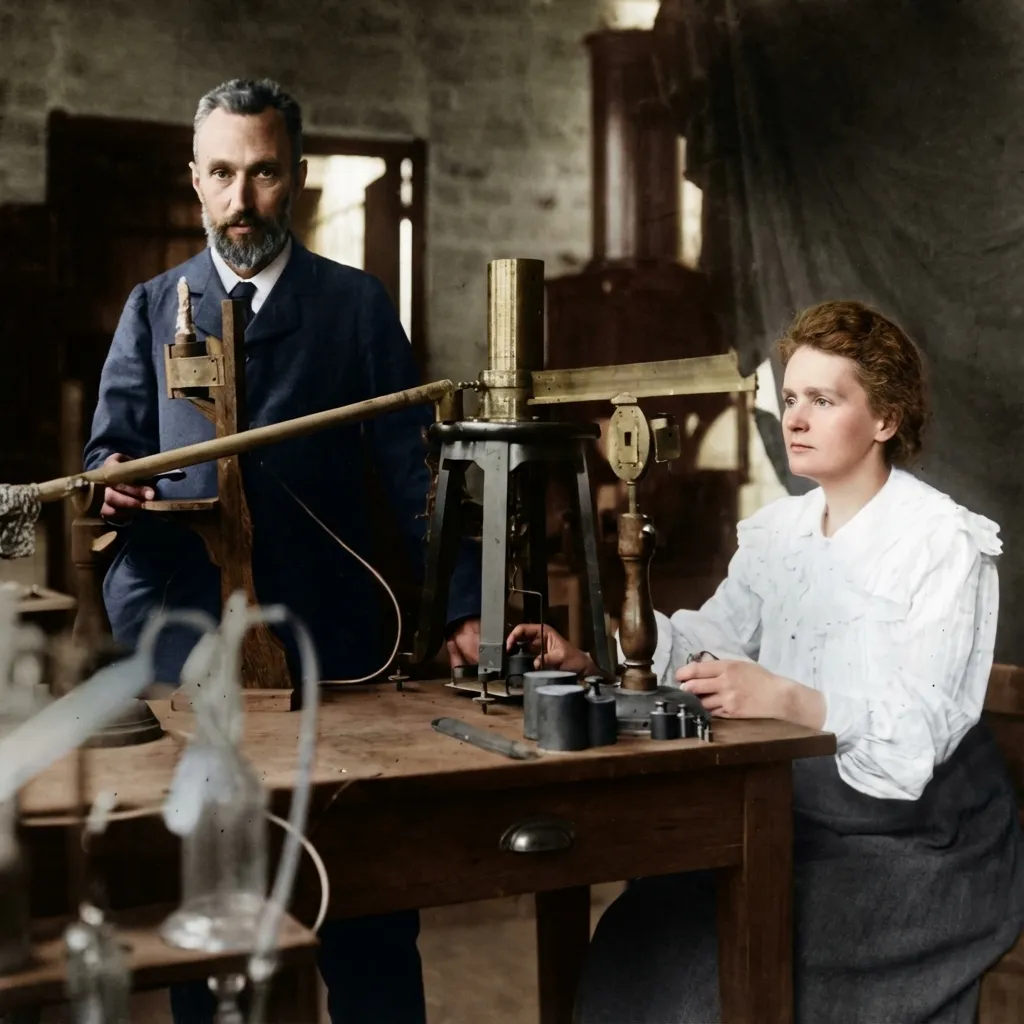
Curie discovered two new elements on the periodic table. The first she named Polonium after her native land of Poland, hoping to bring attention to its struggle for independence. The second was Radium (from the Latin "radius" or ray), which became famous for its intense radioactivity.
5. She didn't patent her work
This is perhaps her greatest gift to humanity. Marie and Pierre Curie could have become incredibly wealthy by patenting the radium isolation process. Instead, they famously decided to publish their methods freely so that the scientific community and medical industry could use radium to treat cancer without hindrance. She said, "Radium is not to enrich anyone. It is an element; it is for all people."
6. The "Little Curies" of WWI
When World War I broke out, Curie saw that wounded soldiers needed immediate care. She developed mobile X-ray units—ambulances equipped with X-ray machines—that could be driven to the front lines. She learned to drive, fixed the engines herself, and trained 150 women to operate the equipment. These "Little Curies" helped army surgeons locate bullets and shrapnel, saving countless limbs and lives.
7. She was the first female professor at the Sorbonne
After her husband Pierre was tragically killed in a street accident in 1906, the Sorbonne University offered Marie his teaching position. She accepted, becoming the first female professor in the university's 650-year history. Her first lecture was attended by students, artists, and photographers, all eager to see this history in the making.
8. The "Flying University"
Before she put Paris, Marie attended the "Flying University" in Warsaw. It was a secret, underground educational enterprise that taught Polish history and science—subjects banned by the Russian authorities. It changed locations frequently (hence "flying") to avoid detection by the police.
9. Her daughter also won a Nobel Prize
Genius ran in the family. Marie's daughter, Irène Joliot-Curie, worked alongside her mother and later won her own Nobel Prize in Chemistry in 1935 (with her husband Frédéric) for the discovery of artificial radioactivity. The Curies are the most Nobel-decorated family in history.
10. She is buried in the Panthéon
In 1995, Marie and Pierre Curie's remains were moved to the Panthéon in Paris, the mausoleum reserved for France's most distinguished citizens (like Voltaire and Rousseau). Marie was the first woman to be interred there on her own merit. Her coffin is lined with 2.5mm of lead to shield the public from the radiation that still emanates from her remains.