The physicist who bent light. Without his work, the high-speed internet and medical imaging we rely on wouldn't exist.
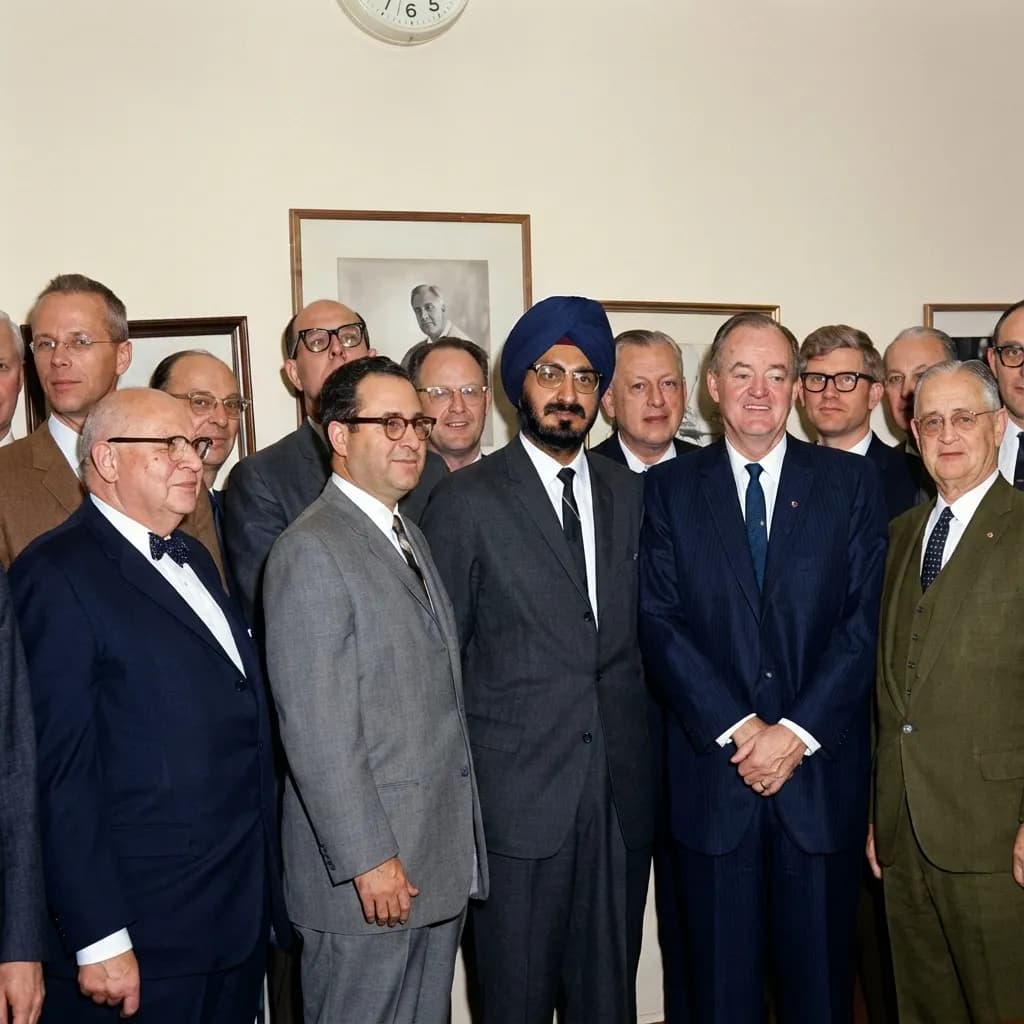
Narinder Singh Kapany was a visionary physicist who proved that light could travel around corners. He coined the term "Fiber Optics" and laid the groundwork for the communications revolution that connects the modern world.
1. He was told light travels in straight lines
As a schoolboy in India, a teacher told Kapany that light only travels in straight lines. Kapany disagreed, arguing it could be bent. He spent the rest of his life proving his teacher wrong.
2. The Breakthrough at Imperial College
In 1953, while working on his PhD at Imperial College London, Kapany and Harold Hopkins achieved the first successful transmission of high-quality images through a bundle of glass fibers. This was the birth of fiber optics.
3. He coined the term "Fiber Optics"
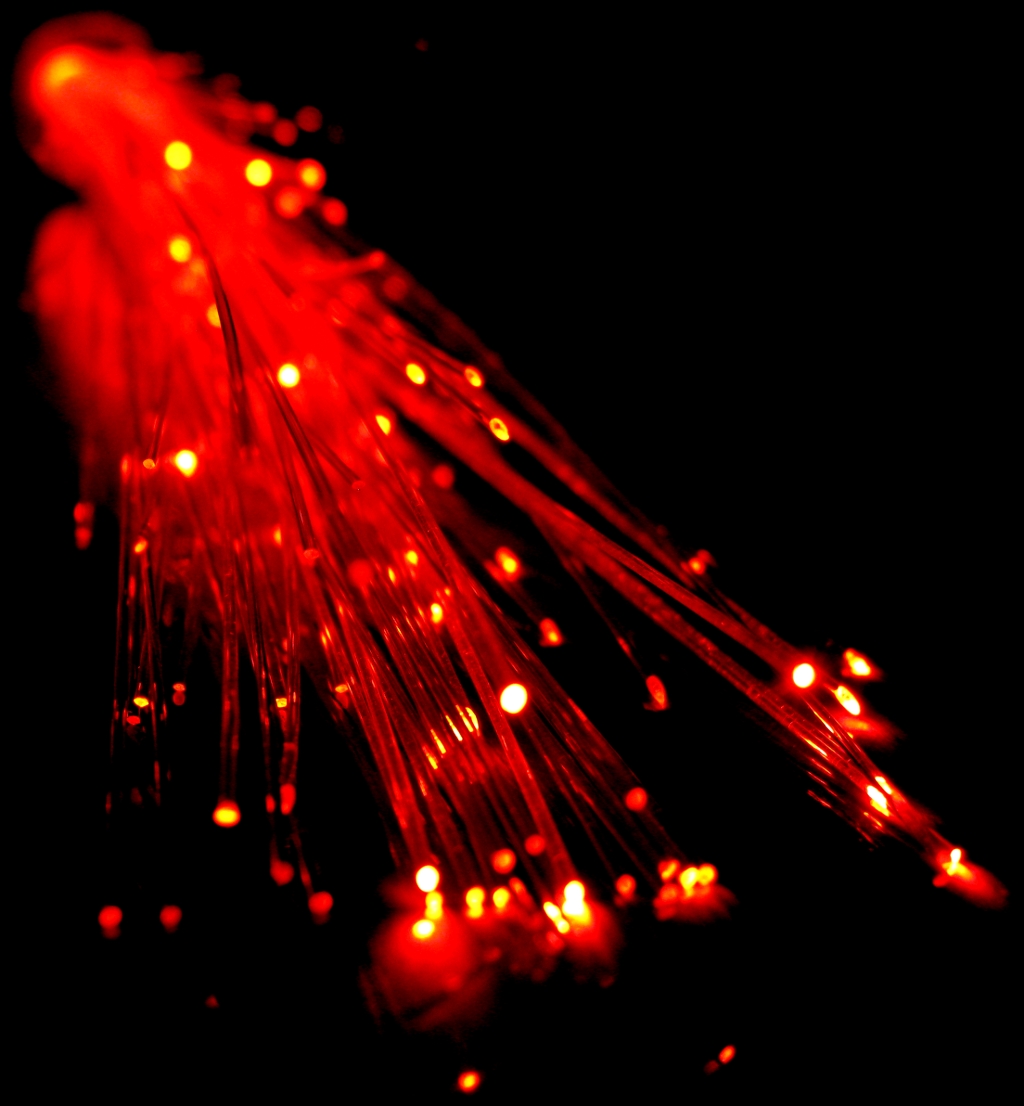
In a 1960 article for Scientific American, Kapany introduced the term "fiber optics" to the world. He wrote the first book on the subject, establishing the new field of physics.
4. He revolutionized medicine
His work wasn't just for the internet (which didn't exist yet). His primary initial goal was medical. His "fiberscope" allowed doctors to see inside the human body without major surgery, leading to modern endoscopy and non-invasive surgeries.
5. He was a prolific inventor
Kapany held over 120 patents. His inventions ranged from biomedical instrumentation and solar energy to pollution monitoring devices. He was a true polymath of optics.
6. A Sikh Philanthropist
Kapany was deeply proud of his Sikh heritage. He founded the Sikh Foundation in 1967 to promote Sikh art, culture, and education. He donated a massive collection of Sikh art to the Asian Art Museum in San Francisco.
7. He was an "Unsung Hero"
In 1999, Fortune magazine named him one of the seven "Unsung Heroes of the 20th Century." While Charles Kao won the Nobel Prize for fiber optics in 2009, many in the scientific community felt Kapany's foundational work was overlooked.
8. He was an artist himself
Kapany wasn't just a collector; he was a sculptor. He created "dynoptic" sculptures that used fiber optics and light to create changing colors and patterns, blending his scientific expertise with artistic expression.
9. Entrepreneurship in Silicon Valley
He moved to California and became one of the early entrepreneurs of Silicon Valley. He founded Optics Technology Inc. in 1960 and took it public in 1967, paving the way for the tech boom.
10. Posthumous Honor
In 2021, the Indian government awarded him the Padma Vibhushan, the country's second-highest civilian award, recognizing his immense contribution to science and humanity.