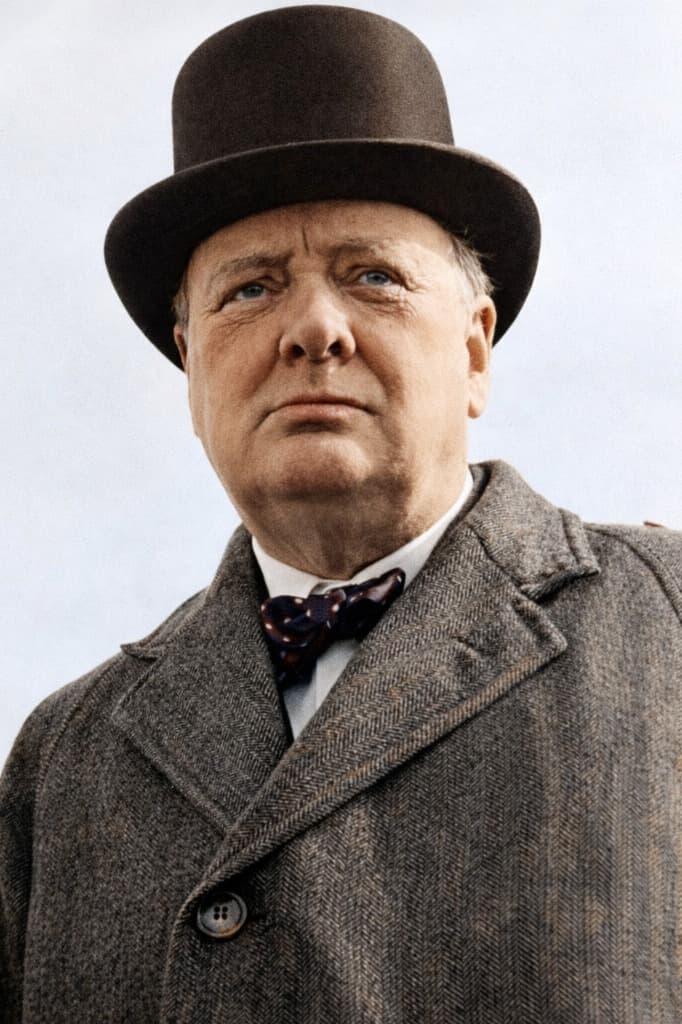
Soldier, writer, and statesman. The man who rallied a nation against tyranny with nothing but his voice.
Sir Winston Churchill stands as a colossus of the 20th century. Best known for leading Britain through its darkest hours in World War II, his life was full of adventure, failure, and unexpected turns. Here are 10 facts about the man who famously said, "We shall never surrender."
1. He was a prisoner of war
Long before becoming Prime Minister, Churchill was a war correspondent. During the Boer War in 1899, his armored train was ambushed, and he was captured. He famously escaped from the prison camp by climbing over a wall and hopping onto a passing freight train. He traveled almost 300 miles to safety in Portuguese East Africa, returning to Britain as a national hero.
2. He won the Nobel Prize in Literature
Many assume that if Churchill won a Nobel Prize, it would be the Peace Prize. However, in 1953, he was awarded the Nobel Prize in Literature. The committee cited "his mastery of historical and biographical description as well as for brilliant oratory in defending exalted human values." He wrote over 40 books, including a massive six-volume history of World War II.
3. He was an avid artist
To combat what he called his "black dog" of depression, Churchill took up painting in his 40s. It became his lifelong passion. He produced over 500 paintings, mostly impressionist landscapes. One of his paintings, depicting a sunset over the Atlas Mountains, was the only painting he created during WWII and was later gifted to Franklin D. Roosevelt.
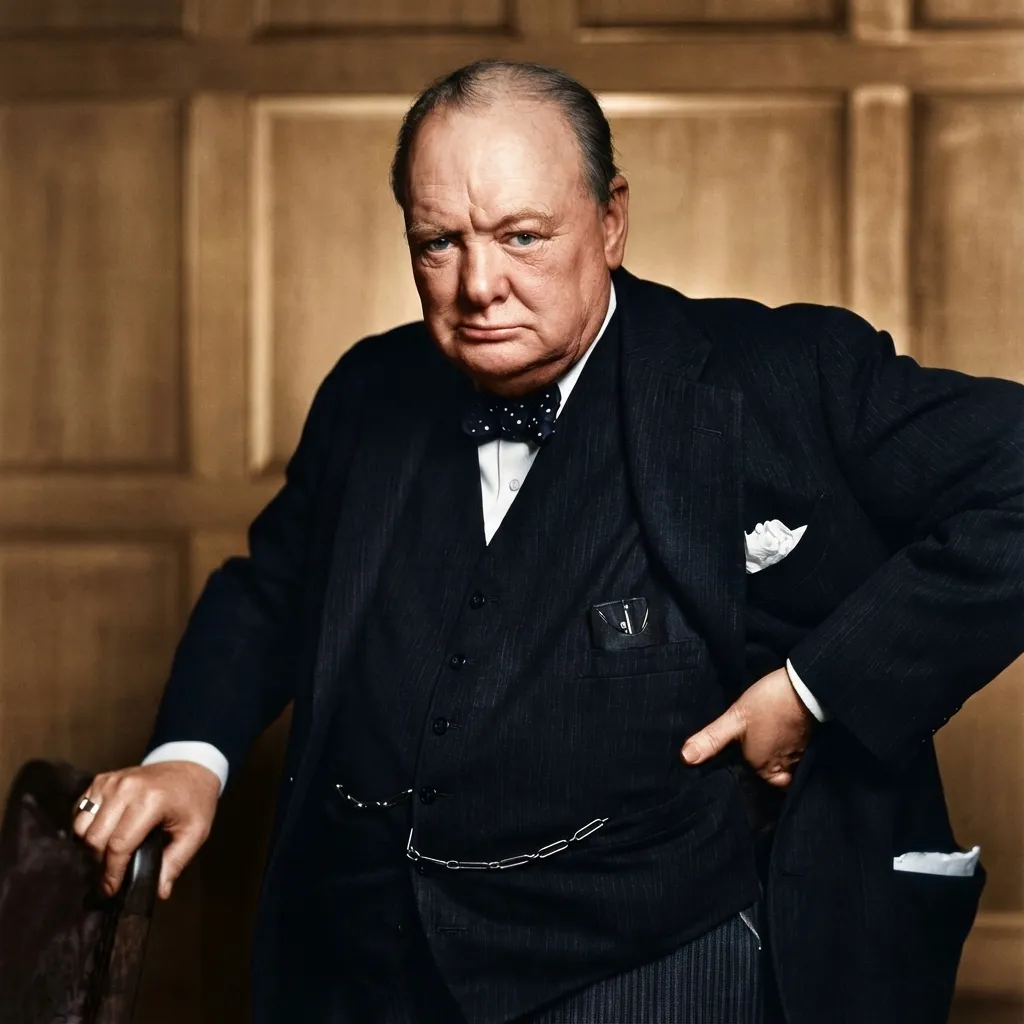
4. His speeches were carefully crafted
Though his speeches sounded spontaneous and thunderous, Churchill spent hours crafting them. He would dictate them to secretaries, then edit them intensely to look like poetry on the page. He used a technique called "psalm style," breaking lines to aid his rhythm and delivery, knowing exactly when to pause for effect.
5. He was half American
Churchill is often seen as the quintessential Briton, yet he was half American. His mother was Jennie Jerome, a wealthy socialite from Brooklyn, New York. This dual heritage was something he was very proud of, often referencing the unity of the English-speaking peoples. In 1963, he became the first person to be made an Honorary Citizen of the United States.
6. He struggled in school
As a boy, Churchill was rebellious and struggled academically. He was sent to Harrow School but was placed in the lowest division because of his poor performance in Latin and Math. He famously failed the entrance exam for the Royal Military Academy Sandhurst twice before passing on his third attempt.
7. He pioneered the tank
During World War I, while serving as First Lord of the Admiralty, Churchill was one of the few high-ranking officials to support the development of a new "landship" to break the stalemate of trench warfare. He used Navy funds to develop the prototype, which eventually became the tank. The project was so secret that the workers were told they were building "water tanks" for Mesopotamia, hence the name.
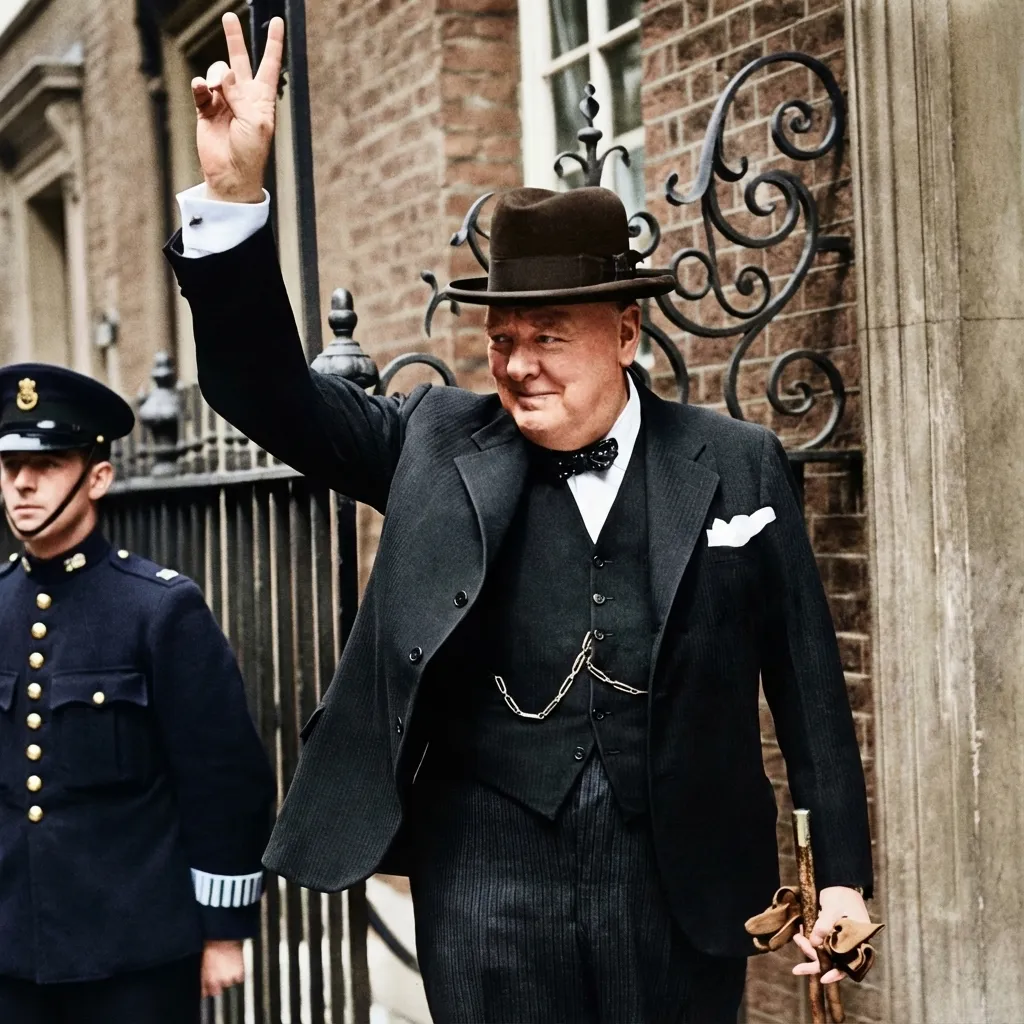
8. He was voted out before the war ended
Despite his immense popularity and leadership during the war, the British public voted him out of office in the general election of July 1945—before the war against Japan had even finished. The public wanted post-war reform and a welfare state, which the Labour Party promised. Churchill was shocked but accepted the defeat, famously quoting, "That is democracy."
9. His "Siren Suit"
Churchill was a practical man who prized comfort. During the air raids of the Blitz, he wanted a piece of clothing he could jump into quickly. He helped design the "siren suit," a one-piece zip-up jumpsuit made of wool or velvet. He wore it frequently, even when meeting world leaders like Eisenhower and Stalin.
10. He had a speech impediment
Like Marilyn Monroe, Churchill battled a speech impediment. He had a lateral lisp (trouble pronouncing 's' and 'z' sounds). He worked tirelessly to overcome it, rehearsing phrases and words to minimize the lisp. Unlike Monroe, he didn't use a breathy voice but instead used power, volume, and deliberate pacing to mask his difficulty.